Quick answer
Pinyin uses Latin letters and is the standard in mainland China and most international textbooks. Zhuyin (Bopomofo) uses 37 dedicated symbols and is what Taiwan uses in schools, children's books and everyday phone typing. If you are learning Taiwanese Mandarin, living in Taiwan or reading Taiwanese children's books, Zhuyin pays off. If you already know Pinyin, you can add Zhuyin in a couple of weeks of short practice and keep both.
Zhuyin and Pinyin at a glance
Zhuyin and Hanyu Pinyin describe the same Mandarin sounds. Almost every Pinyin spelling has an exact Zhuyin equivalent, so learning one makes the other much easier. Here is how they compare in practice.
| Zhuyin (Bopomofo) | Hanyu Pinyin | |
|---|---|---|
| Who uses it | Taiwan: schools, children's books, the most common phone and computer input | Mainland China and most international textbooks; Taiwan also uses it to romanize place names and signs |
| Script | 37 dedicated symbols (ㄅㄆㄇㄈ…) | Latin letters with tone marks (mā, má…) |
| Typing | Zhuyin keyboard: one key per symbol, plus tone keys | Typed on a regular Latin keyboard, usually without tones |
| Ambiguity | Each symbol is one sound, with no link to your native language's spelling | Familiar letters carry old habits (q, x, c, zh); a few spelling shortcuts hide sounds |
| Learning curve | New shapes to learn first, then very regular | Readable on day one, then spelling rules to absorb |
Where you will meet each system
In Taiwan, children learn to read with Zhuyin before they know many characters, and children's books print it next to the characters. Most people in Taiwan also type Chinese with a Zhuyin keyboard on their phones and computers, so it is part of daily life, not just a school tool.
Hanyu Pinyin is the system used in mainland China and in most textbooks written for international students. Taiwan has adopted it for romanizing place names and street signs, so you will see it there too, but mostly in that role.
In other words, the question is less "which is better" and more "which world are you heading into".
The tricky spellings, side by side
The basic letters map simply: b is ㄅ, m is ㄇ, zh is ㄓ, an is ㄢ. The surprises are the places where Pinyin uses a shortcut and Zhuyin spells out every sound. These are worth learning on their own, because they are also where Pinyin learners most often mispronounce words.
| Pinyin | Zhuyin | Example |
|---|---|---|
| iu | ㄧㄡ | 六 ㄌㄧㄡˋ liù |
| ui | ㄨㄟ | 對 ㄉㄨㄟˋ duì |
| chun | ㄔㄨㄣ | 春 ㄔㄨㄣ chūn |
| jun / qun / xun / yun | ㄩㄣ | 群 ㄑㄩㄣˊ qún |
| ju / qu / xu (the ü dots dropped) | ㄐㄩ / ㄑㄩ / ㄒㄩ | 去 ㄑㄩˋ qù |
| yu | ㄩ | 魚 ㄩˊ yú |
| yi / wu | ㄧ / ㄨ | 一 ㄧ yī, 五 ㄨˇ wǔ |
| zhi / chi / shi / ri | ㄓ / ㄔ / ㄕ / ㄖ alone | 知 ㄓ zhī |
| zi / ci / si | ㄗ / ㄘ / ㄙ alone | 四 ㄙˋ sì |
| ie (ê) | ㄧㄝ | 謝 ㄒㄧㄝˋ xiè |
The -i in zhi, chi, shi, zi, ci and si is not the vowel in yi. Zhuyin makes that obvious by writing ㄓ or ㄙ with nothing after it.
Typing: the biggest practical difference
With Pinyin, you type letters on the keyboard you already know and pick characters from a list, usually without entering tones. It is quick to start, but because tones are skipped, the list of candidates can be long.
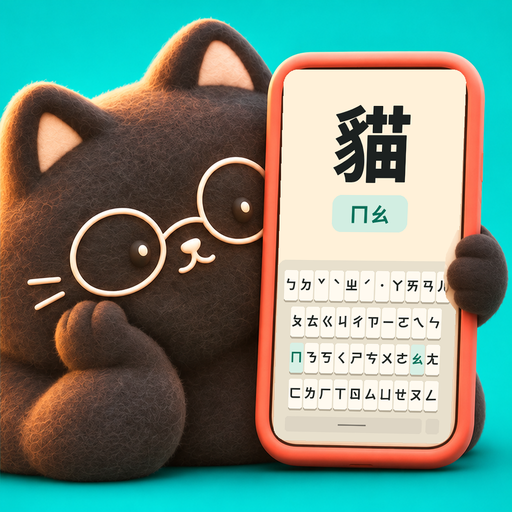
With Zhuyin, each symbol has its own key and you finish each syllable with a tone key (on a computer, Space is the 1st tone). It takes some practice to learn the layout, but the tone you type narrows down the candidates, and it trains you to think about tones every time you write.
Setting up a Zhuyin keyboard on an iPhone, iPad or Mac takes a minute; see setting up a Zhuyin keyboard and how to type Zhuyin.
Should you learn Zhuyin?
A fair answer depends on where your Mandarin is going. Zhuyin is not harder in the long run, but it is an extra step if everything around you uses Pinyin.
- Learning Taiwanese Mandarin, or living in Taiwan: Zhuyin pays off. Classes, materials and the people you type with will use it.
- Reading Taiwanese children's books or school materials: Zhuyin is printed next to the characters, so you need it to use them.
- Studying with mainland Chinese materials only: Pinyin is enough; Zhuyin is optional.
- Already comfortable with Pinyin: you do not have to choose. You already know the sounds, so adding Zhuyin is mostly learning 37 shapes and the spellings above.
Adding Zhuyin when you already know Pinyin
Pinyin users have a real head start. You already know the sounds and tones, so the job is matching shapes to sounds you can say. With short daily sessions, many learners can read and type the symbols in about two weeks, then keep using Pinyin wherever it is more convenient.
Start with the Zhuyin chart, which shows the Pinyin next to each symbol, and follow a two-week Zhuyin plan to spread the 37 symbols over manageable days. Typing what you learn, rather than only reading it, is what makes the shapes stick.
Typomo is built around that idea: you learn the symbols on a practice keyboard laid out like the iPhone Zhuyin keyboard, then use them to type words and sentences.
Frequently asked questions
Is Zhuyin harder than Pinyin?
Zhuyin takes a little longer at the start because the 37 symbols are new. After that it is very regular: one symbol is always one sound, without the spelling shortcuts Pinyin uses. Many learners find it no harder once the shapes are familiar.
Should I learn Zhuyin if I already know Pinyin?
If you are learning Taiwanese Mandarin or spend time in Taiwan, it is worth it. You already know the sounds, so you are mainly learning new shapes. You can keep using Pinyin alongside it.
Do people in Taiwan use Pinyin?
Taiwan uses Hanyu Pinyin to romanize place names and signs. For learning to read and for typing Chinese, Zhuyin is the common system.
Can I type Traditional Chinese with Pinyin?
Yes, Pinyin input methods can produce Traditional characters. Many learners of Taiwanese Mandarin still switch to Zhuyin input because it matches what they see in Taiwanese materials and makes them practice tones.